Electric Car Safety Guide for Earthquakes and Floods
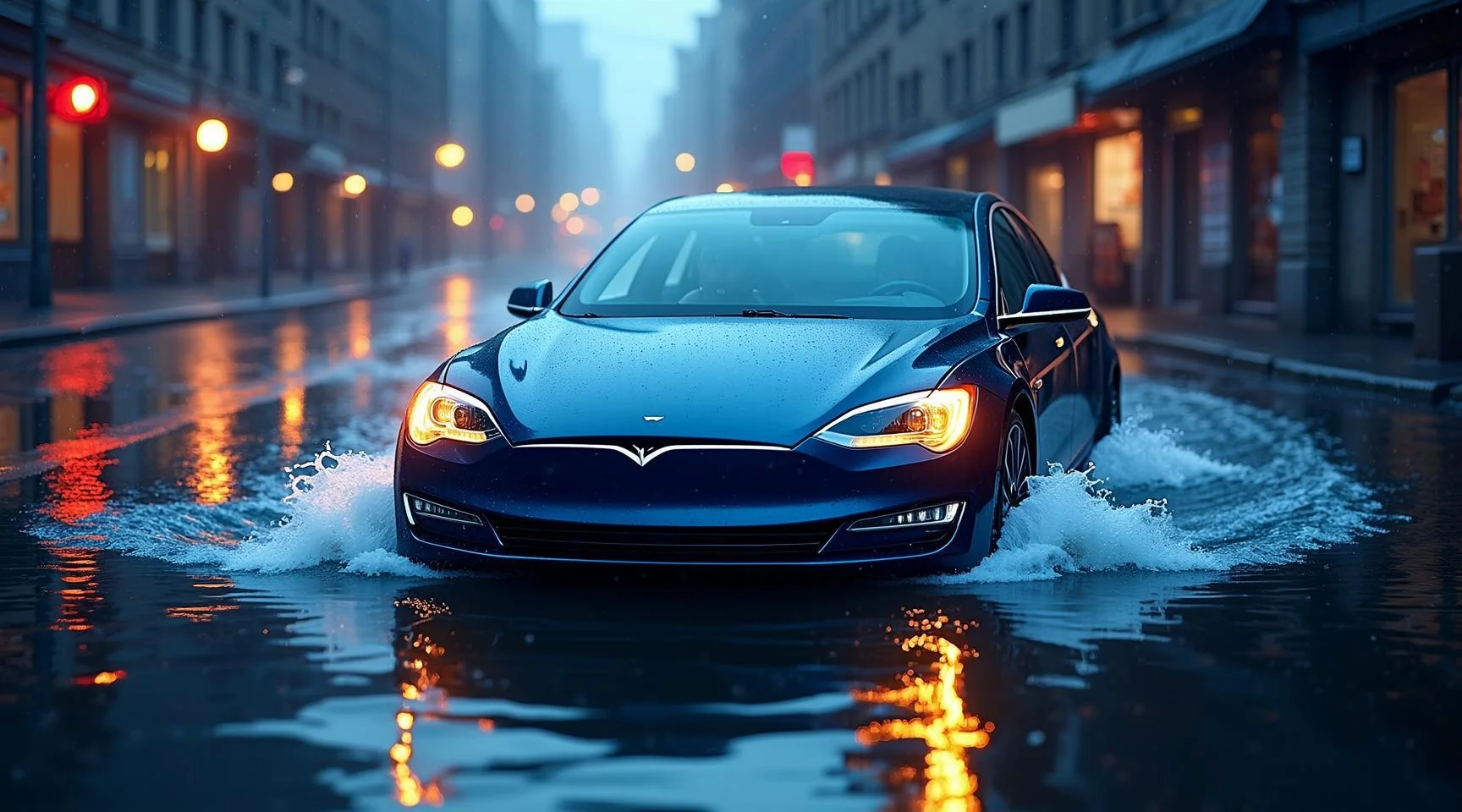
One of the questions electric vehicle owners hear most often is about water: "If I stay inside my car in floodwaters, will I be electrocuted?" The question may sound exaggerated, but it is a legitimate concern for every EV owner living in a country with flood risk. The good news is that modern battery design addresses most of this fear; the bad news is that a "waterproof" car does not mean "undamaged." In this guide, we cover flood safety, battery risks, and the steps to follow after a flood, to the extent supported by research sources.
Water and the battery: What do IP67 and IP69 standards mean?
Modern electric vehicle battery packs are fully sealed systems. Unlike internal combustion engines, they have no air intake line; that is, standing water is not directly a "suffocating" problem for the battery. In battery packs used by brands such as Tesla, Togg, and Hyundai, two protection standards stand out:
- IP67: Guarantees that the battery can remain in water at a depth of 1 meter for 30 minutes without leaking.
- IP69: Offers resistance against high-pressure and hot water sprays.
So a brief water contact close to wheel height stays within design limits for most modern EVs. However, these values are not unlimited: exceeding the duration or depth means the end of the protection.
Is there a risk of electric shock while inside the vehicle?
According to Sarjevi's flood safety guide, there is no risk of being electrocuted inside the vehicle. There are two engineering reasons for this. First, the vehicle body acts like a Faraday Cage Second, and more critical: the Battery Management System (BMS), when it detects a ground fault or leakage, within milliseconds detonates pyrotechnic fuses called the Pyrofuse These fuses physically disconnect the battery's high voltage from the vehicle. The result is often that the car becomes unusable, but the people inside are safe; the high voltage leakage is cut off instantly.
Golden rules for driving in water
You do not have to cross standing water under all conditions, but if you must, the protocol followed by experienced drivers is quite clear:
- Reduce your speed: Proceed at a maximum of 10 km/h. High speed creates a wave in front of the vehicle and can damage cameras and sensors.
- Monitor the water level: If the water exceeds the door sill, stop. At this level, leave a window slightly open to guard against the risk of electronic windows failing to close, or make sure the doors are not locked.
- Dry the brakes after exiting the water: Heat and dry the wet brake pads by braking lightly.
The invisible risk after a flood: corrosion and insulation loss
Here is the part of the story that is rarely told. Floodwaters contain mud, salt, and chemicals; when they dry, they can cause corrosion in cable connections. Even if the water does not seem to cause anything immediately, insulation loss can develop over time. This is why a "waterproof" claim is not the same as being "undamaged."
The practical threshold is clear: if the vehicle has been in water exceeding wheel height for more than 15 minutes, which has remained in water exceeding wheel height for more than 15 minutes remains, a high voltage insulation test — Megger test — should be performed. This test detects leaks in the cable insulation and can prevent a vehicle that appears problem-free from suffering a serious failure in the future.
The hidden detail of the used car market: flood-damaged vehicles
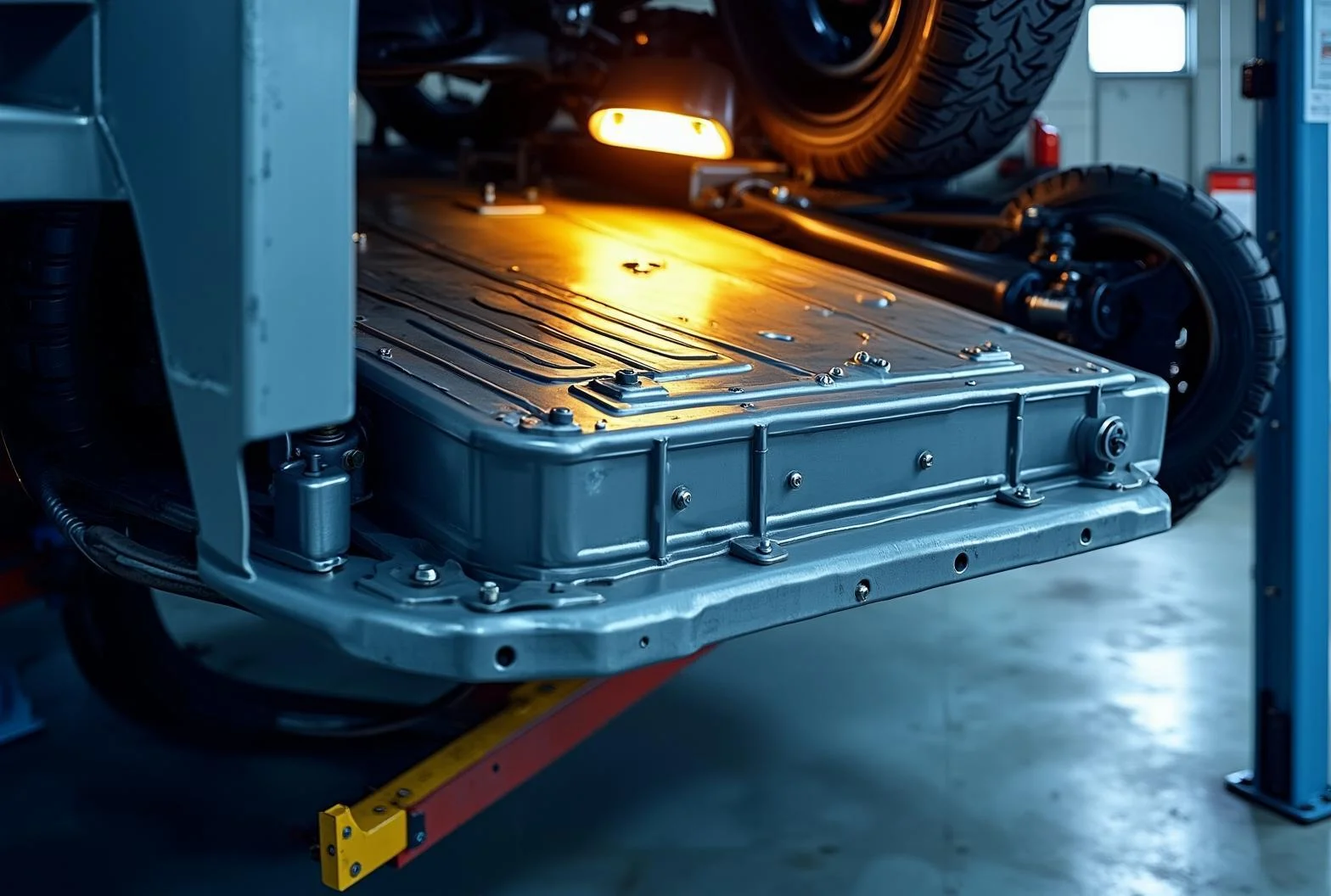
Damaged vehicles circulating in the market after floods pose a separate risk area for buyers. Since battery packs spread across the vehicle's floor ("skateboard chassis" architecture), underbody impacts and water contact can affect the battery without being visible from the outside. Things to check when evaluating a used EV:
- Battery enclosure and underbody damage — scraping against curbs, hard speed bumps, or flying stones can crush and crack the enclosure; micro cracks lead to moisture and water leaks.
- Panel alignment deviations — chassis impacts may have bent the battery carrier frame without being visible from the outside.
- SOH (state of health) value — the ratio of the current range to the zero-kilometer range. For example, a vehicle with a 400 km range drops to approximately 320 km at 80% SOH.
Even a dent should be taken seriously: manufacturers can void the battery warranty over the slightest dent in the battery protection plate. And battery replacement can reach 40-60% of the electric vehicle's total cost. Enclosure damage also carries a thermal runaway risk — lithium-ion cells deforming and short-circuiting with uncontrolled heat buildup. Regarding fire risk, the expert warning featured on Anadolu Agency points in the same direction: always use authorized service and original parts for maintenance and repair.
Charging habits also affect battery health: frequent DC fast charging causes heat buildup and wear; the number of charge cycles and very hot or cold climate conditions are also among the factors affecting battery life.
An honest note about the limits of this guide
It is still difficult to find reliable Turkish-language sources published on earthquake-specific safety protocols for electric vehicles, insurance and damage processes, and emergency power use with V2G (vehicle-to-grid) technology. Rather than giving definitive information on these topics, we preferred to stick to verified flood safety data. The healthiest approach is for EV owners in high earthquake risk zones to follow their vehicle manufacturers' official emergency documents.
Final word
Electric vehicles are not time bombs waiting to explode in water; thanks to IP67/IP69 protection, Pyrofuse, and the Faraday cage, they contain serious safety measures for those inside. The real issue is not momentary water contact, but post-flood corrosion and insulation loss. The rule is simple: have a Megger test done on any vehicle exposed to water deeper than wheel height for more than 15 minutes, and always have the underbody inspected on a lift when buying used.
Sources
- Electric Vehicles and Flood Safety: Does the Battery Leak? A Survival Guide for Emergencies - Sarjevi
- Used Electric Vehicle (EV) Inspection Guide: Battery Health and Body Safety - Arabal AI
- Warning about "authorized service and original parts" against fire risk in electric cars - Anadolu Agency
- Fire Safety Measures in Electric Vehicles - Automobile Magazine