Electric Car Tires: Range and Efficiency Guide
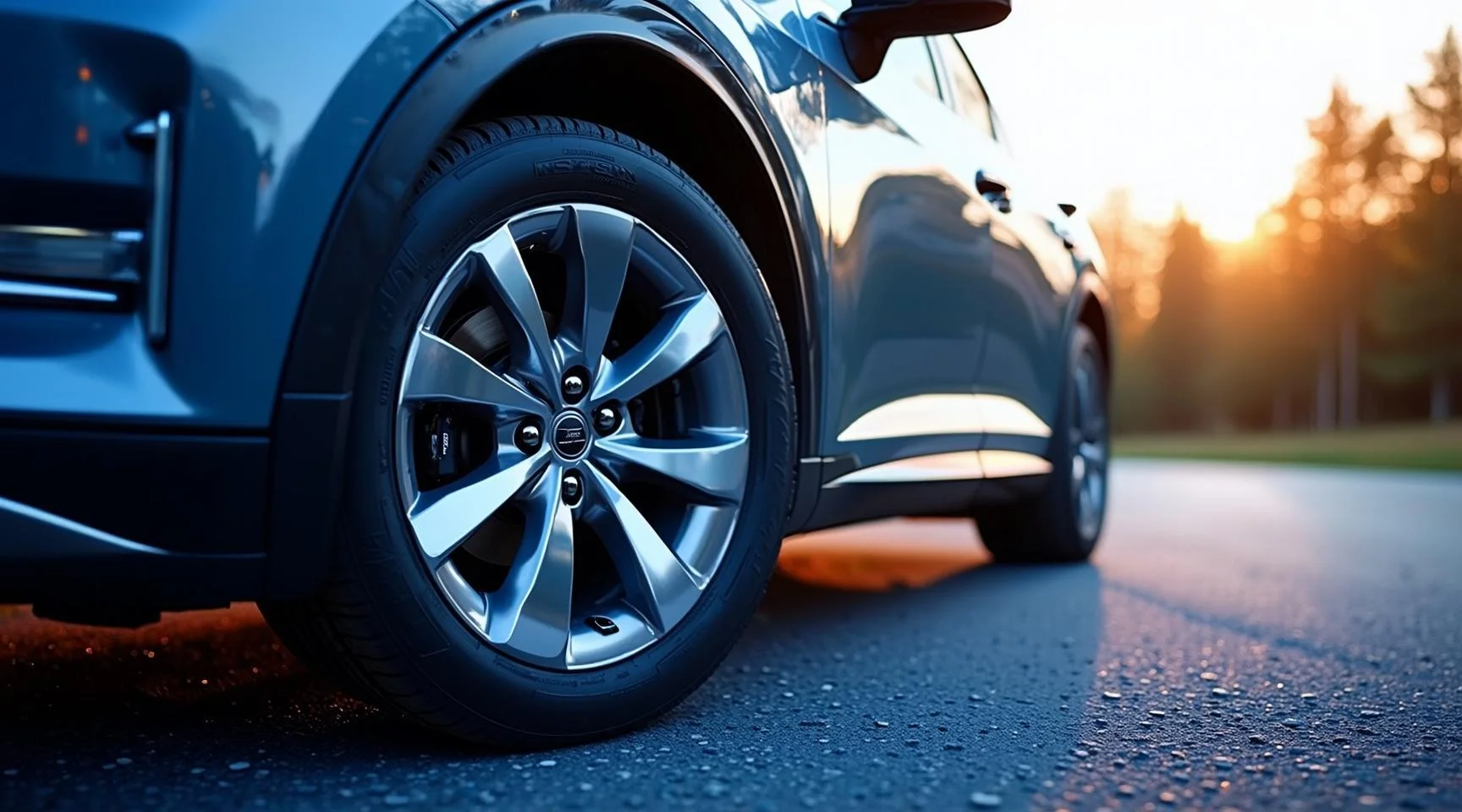
When it comes to range in an electric car, the first things that come to mind are the battery and air temperature; yet the rolling resistance created by the four tires alone accounts for roughly 20-30% of an EV's energy consumption. The wrong tire choice can silently strip 25-40 km from a car with a 500 km range. In this guide, we examine the effect of tire selection for electric vehicles on range, quietness, and wear, using independent test results from the 2025-2026 period.
Why are electric vehicle tires different?
An electric car is on average 300-500 kg heavier than an equivalent gasoline-powered car due to the battery pack. The Tesla Model Y weighs around 1,760 kg, while a similarly sized BMW X1 gasoline model is around 1,500 kg; the Togg T10X is 1,815 kg. This extra weight is felt at every point of the tire.
The second difference is torque. An electric motor delivers maximum torque from zero rpm and applies high shear forces to the tires during acceleration. The result: a standard tire can wear 20-30% faster under an EV. The third factor is quietness — with no engine noise, tire-road noise is heard much more distinctly in the cabin. That is why EV tires use special tread patterns and acoustic foam technologies (Michelin Acoustic, Pirelli PNCS, Hankook Sound Absorber, Continental ContiSilent).
For all these reasons, in electric vehicles XL (Extra Load) or HL (High Load) load-indexed tires are essential. A low-index tire carries the risk of premature wear, as well as sidewall deformation and blowouts.
The relationship between rolling resistance and range
A tire flexes as it rotates, and this flexing generates heat, which is lost energy. This is why the rolling resistance class on the EU energy label matters: the difference between class A and class C means, in practice, a 5-8% gain or loss in range — on a car with 500 km of range, that is a difference of 25-40 km.
Independent tests clarify the magnitude of the difference:
- Auto Žurnál 2026 (VW ID.3): There is a difference of 1.54 kWh/100 km between the most efficient tire (Goodyear, 12.86 kWh/100 km) and the least efficient (Imperial, 14.40 kWh/100 km) — a range loss of about 65 km.
- AutoBild 2025 EV test: The most efficient, the Falken e.Ziex, delivered 410 km of range, while the least efficient, the Continental, managed only 344 km. A difference of exactly 65 km between the two.
- Michelin: With class A resistance, the e.Primacy promises up to a 7% increase in range, and the Pilot Sport EV promises up to 60 km of additional range.
However, a warning is needed: in Auto Motor und Sport's 2026 ECO test, the three tires with the lowest rolling resistance (Continental, Giti, Falken) also delivered the weakest wet braking performance. There is a documented trade-off between range and safety; the most efficient tire is not automatically the best tire.
What should you look for in quiet driving?
The decibel value and wave count on the EU tire label should be your first guide for quietness; tires below 70 dB are preferred in EVs. According to test results, the Falken e.Ziex was selected as the quietest cabin tire at low speed in the Auto Motor und Sport 2026 ECO test. The Hankook iON evo, meanwhile, took overall first place in both the AutoBild 2025 and Auto Žurnál 2026 EV tests and holds a leading position in comfort/quietness scores — along with strong results such as 39.6 meters in wet braking.
Wear, air pressure and maintenance
The lifespan of an EV tire varies by segment: 40,000–50,000 km for premium models (Michelin, Continental), 25,000–30,000 km in the budget segment. User reports on Togg and Tesla forums show that the rear tires in particular wear out faster than the front ones, and that this problem is frequently reported on high-torque models (for example, Tesla Performance).
- Check the air pressure monthly; readjust the pressure during seasonal transitions.
- Have the tires rotated every 8,000–10,000 km — the high-torque driven axle wears much faster.
- Avoid sudden acceleration; using Eco mode can extend tire life by 15–20%.
- Have the wheel balance checked every 15,000 km.
In Turkey, the summer tire period runs from April 1 to December 1. All-season EV tires (Michelin CrossClimate 3, Continental AllSeasonContact 2) are a practical solution in mild regions; a separate winter tire is the better choice in Central and Eastern Anatolia.
Prices and economic balance (May 2026)
EV tires may seem expensive — large sizes (19–21 inches), reinforced sidewall construction, special compounds and acoustic foam are the reasons for this. Examples of prices in Turkey: Bridgestone Turanza 6 ENLITEN (235/50 R19) 5,800–7,500 TL, Hankook Ventus S1 Evo 3 EV T2 (255/45 R19) 7,800–10,900 TL, Continental PremiumContact 7 XL (255/45 R19) 10,800–14,100 TL, Pirelli P Zero PZ4 ELECT T0 (255/45 R19) 10,750–14,130 TL, Michelin Pilot Sport EV Acoustic (255/40 R20) 14,100–14,800 TL (per-unit prices, May 2026).
The calculation can still come out in favor of savings: a class A tire set saves approximately 1,000–2,000 TL in electricity per year over 20,000 km compared to class C; the 1.54 kWh/100 km difference in the ID.3 test also corresponds to roughly 1,400–2,000 TL over the same mileage. The premium price difference can pay for itself within 2–3 years.
Frequently asked questions: can regular tires be fitted, is T0 mandatory?
As long as the size and speed index match, regular tires can technically be fitted to an EV; however, an XL load index is mandatory, and regular tires bring the risk of range loss, noise and rapid wear. On the other hand, independent tests show that the gap between premium standard tires and EV-specific tires is narrowing — standard premium models such as Continental and Goodyear are following the EV-specific iON evo very closely.
Tesla's T0/T2, Volvo's VOL, and BMW's star (*) marked OE tires come with the manufacturer's fine tuning; the unmarked version of the same model can also be used safely, with the difference being at the level of minor compound improvements. One note: on EVs, run-flat tires may negatively affect range due to their extra weight. For the Togg T10X, test winner Hankook iON evo stands out; on the budget side, the Bridgestone Turanza 6 ENLITEN (235/50 R19), produced in Turkey, is a sensible alternative.
Conclusion: getting the balance right
Ultra-budget tires can lag behind premium ones by up to 15 meters in wet braking, and in ADAC's 2026 test Lassa Revola received a "not recommended" rating. For range, look for an A-class label, but also check the wet braking results; with monthly pressure checks and regular rotation, extending tire life significantly is in your hands. The right tire pays back every year as dozens of kilometers of range and cabin quietness.