The Church of Santa Engrácia and The National Pantheon
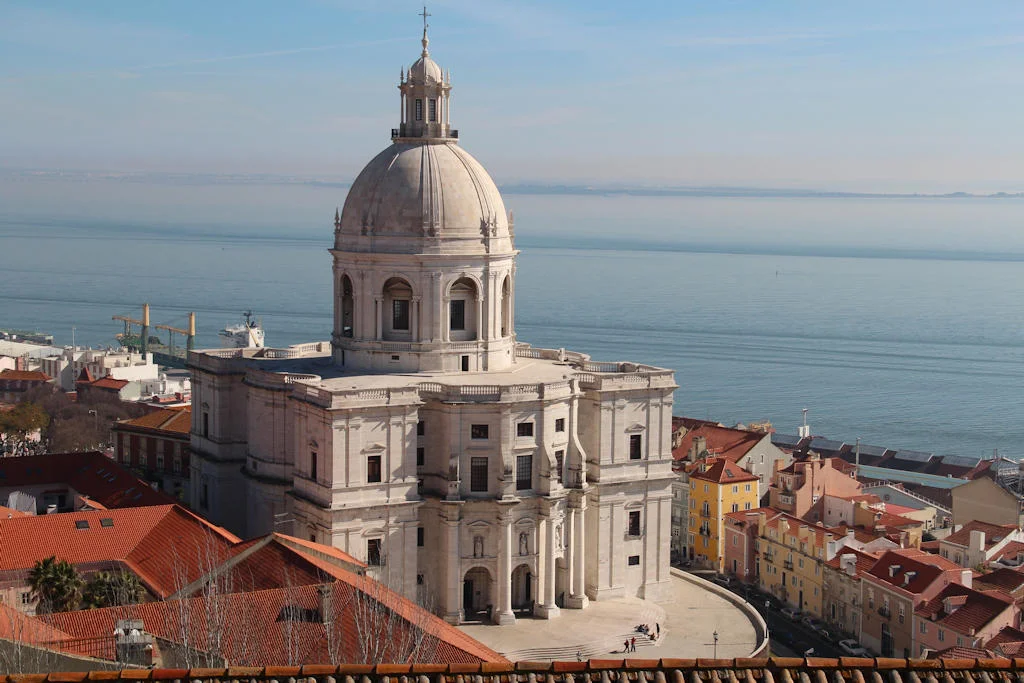
As you stroll through the enchanting streets of our Graça neighborhood, imagine the Santa Engrácia Church rising up, a true testament to the grandeur of 17th century Portugal. Though originally designed as a church, it has gracefully transformed into a sacred sanctuary where the leading figures of Portuguese history find their eternal resting place. And if that alone weren't captivating enough, it shares its charming surroundings with the iconic Monastery of São Vicente de Fora, forming a fascinating mosaic of history and culture that ignited my passion for sharing this experience with other travelers. Join me as I uncover the stories hidden within these revered walls and wander the cobblestone streets of Graça. Vamos nessa!
The current structure, which replaced the previous churches honoring Saint Engratia the Martyr, emerged in 1568 under the patronage of Infanta Maria of Portugal, Duchess of Viseu. When the previous structures collapsed, construction of the present church began in 1681. The renowned architect João Antunes, a leading name in Portuguese Baroque architecture, brought this innovative design to life.
Construction lasted from 1682 to 1712, but the architect's death that same year led King João V to shift his attention and resources to the massive Monastery of Mafra. As a result, the church remained unfinished for centuries, and "obras de Santa Engrácia" became a Portuguese expression meaning a construction project that will go on forever. Eventually a dome was added and the church finally reopened in 1966.